In cooperation with expert friends and partners, CTI develops and publishes capacity-building and training materials to assist States to educate and inform officials on good practices in implementing UNCAT.
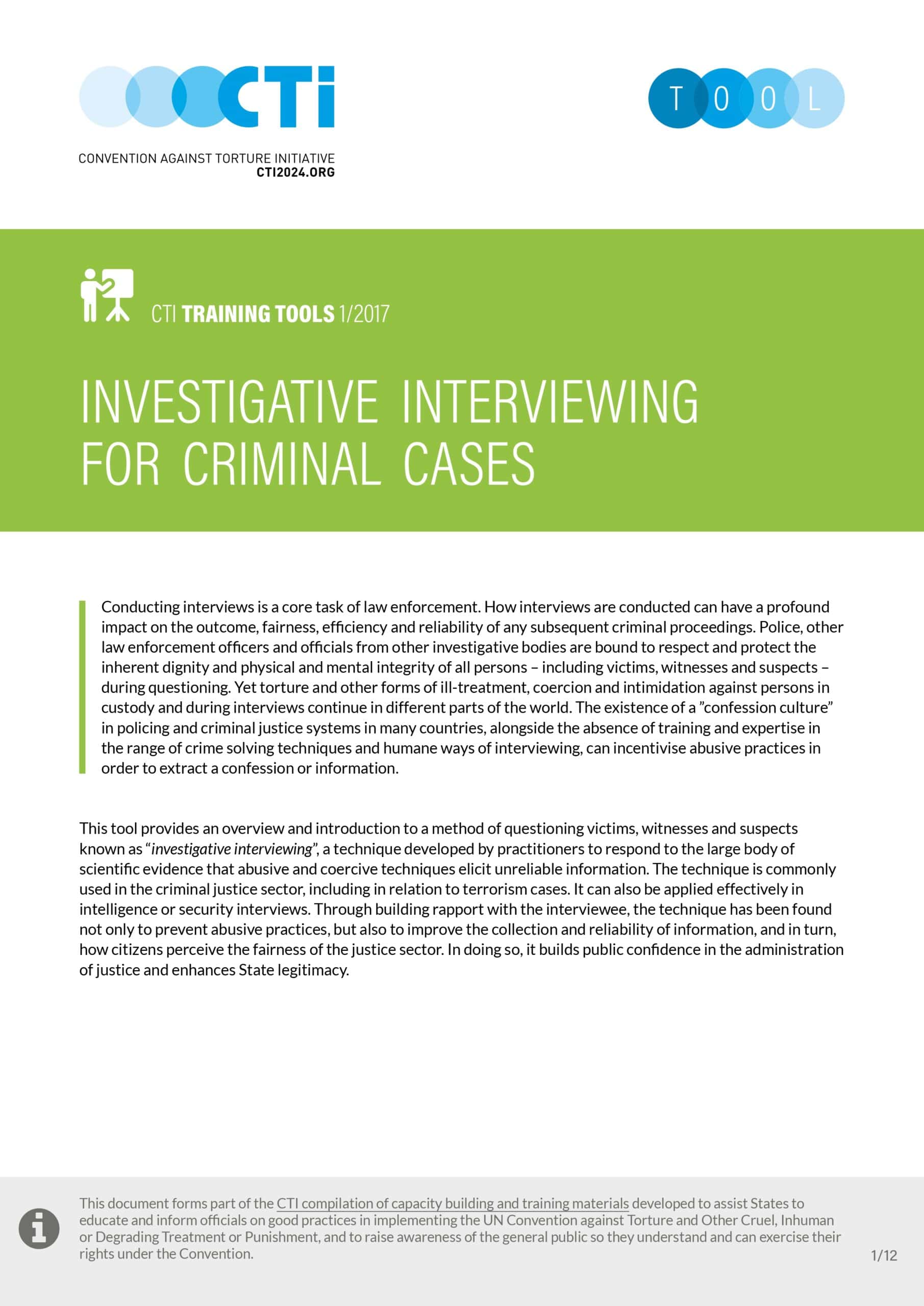
Using non-coercive, rapport-building methods to question suspects, witnesses and victims (known as “investigative interviewing”) increases the likelihood of suspects disclosing meaningful and reliable information, improving investigations and evidence collection. This tool outlines the benefits and basic stages of the investigative interviewing method and is available in 9 languages. Prepared for CTI by the Norwegian Center for Human Rights (NCHR) in cooperation with the Norwegian Police University College, who are leading trainers on this technique around the world, this tool is currently being used in several countries to change policies, practices and trainings.
Police Resource Toolkit for Human Right-Compliant Policing
This practical toolkit supports law enforcement and policy professionals with implementing international legal and human rights standards in various aspects of policing. It compiles existing resources and promising State practices to guide police reform, promote fairness and transparency, and reduce the risk of torture or ill-treatment.
CTI’s expert team responds confidentially to governments and national institutions, offering one-to-one technical support on a wide range of issues relevant to the implementation of UNCAT – such as police and law enforcement, legislative review and reform, policy drafting, prison reform, complaints, investigations and prosecutions, and redress for victims. We have advised many governments and supported them in taking action on torture prevention, eradication and redress.